Showing posts with label sustainability. Show all posts

Friday, November 11, 2016

Watermelon


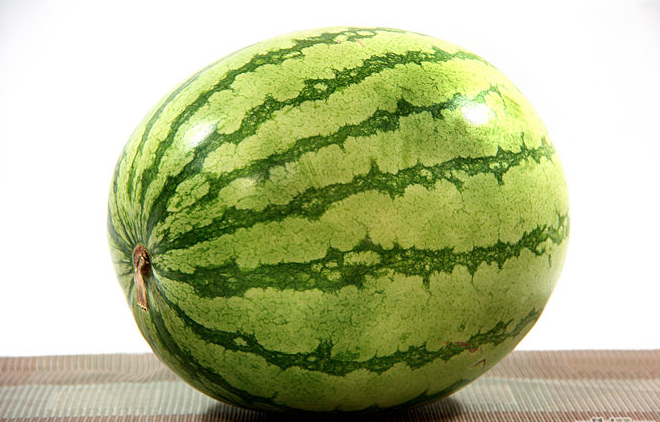
I liken these last few weeks of the election and election night to a group of people standing on the roof of a high-rise skyscraper, looking at a watermelon perched on the edge of the railing. 

The inevitable temptation arises to push the watermelon over the side to see what happens. It's an almost irresistible urge, in fact, even though we logically know that anyone who happens to be underneath as much as a penny thrown from an 80-story building can die, due to the velocity a falling object picks up on its descent back to earth.

But because we've never seen a watermelon fall 80 stories to the ground before, it promises to be a good show, filled with excitement, fear, exuberance or maybe horror. Maybe all those things at once. And so on Tuesday night, we pushed that watermelon off its perch on the railing of the skyscraper, and now we're committed to seeing it plunge towards...whatever happens when a watermelon collides with a planet. It might be interesting and educational. People might be harmed. Or not. No one really knows.

But the collective "we" wanted to see what would happen, and so now the watermelon is in flight -- or free fall -- depending on your perspective.


This is why I write a blog dedicated to homesteading and living locally. It's because of falling-watermelon times such as these.

So what can you do while the cucurbit is airborne? Plant your garden. Make some soap. Focus on your local government and hang out with like-minded friends.

Protesting the watermelon-pushing is futile. So is hating the people who pushed it. They had their reasons, I suppose, some noble, some silly and self-serving, just like anything else.

If you're having trouble with the national elections results, my advice is to unplug from things at the national level and prepare for change by seeing to the things you can control at the local one. You can't always control your garden or home but you can focus on them, as areas you have the ultimate decision-making power in. Set a gopher trap or destroy the burrow? Castile or shea butter soap? The choice is yours and only yours in matters such as these. 

Focus on the things that will not change as a result of what happened this week. Since those are the only things you can truly manage as one individual, in many ways they're the only things that really matter. Focus on that scrap of earth you call your own, and those people and animals you share space with. Be astonished at their beauty, be dismayed at Mother Nature's fickle nature, and be humbled that you are the steward, if not the actual landlord, of the ground you call home. But see it directly, not through the filter of the media or the internet. Focus on those things you can see with your own eyes, in a one-to-one relationship. 

The seeds will sprout, new animals will be born in spring, the rains will fall and the sun will rise at its appointed time no matter who is sitting in the Big Chair in Washington DC. And that can certainly be a comfort if you're willing to live in your own actual, local reality and not the national one. 

Tune out the whooshing background noise of the watermelon in flight for the sounds of birdsong, the neighbor's lawnmower, or even the local blues band. The good news -- and the bad -- is that the watermelon is now in flight and there's not much any of us regular folks can do about it except the same things we've always done...plant our gardens, make our soap, and try and be as self-sufficient as possible. Not trivial things by any measure.


Monday, February 24, 2014

A few more thoughts on sustainability and employment

So the very nice man who offered me the sustainability job I turned down has contacted me twice since then, sweetening the offer by almost doubling the salary, as well as slightly lessening the commute. He's committed to getting the program off the ground, and I admire his dedication.

I am still not taking the position, because as I said in a previous blog post, it's not personally sustainable for me.  But the whole thing has made me think about it from a bigger perspective as well.

I've been thinking about it in regards to how carbon footprints relate to sustainability.  Personally, I believe that the smaller your carbon footprint, the more you are contributing to a sustainable future.  Less dependence on fossil fuels is the key, whether it's using less gasoline to power your car or not adding to the amount of petroleum-based fertilizers put into the ground by buying less mass-produced food from the supermarket. 

So, with that in mind, the future of teaching and academia is clearly not in burning fossil fuels to commute, especially if you're going to be teaching about sustainability.

Traveling to a sustainability/homesteading class, no doubt.

Sustainability is (I believe) best served by utilizing today's modern technologies to disseminate the ideas and share knowledge about things.  In this case, the "things" I speak of are of some very back-to-basics ways of living, like growing food naturally and making much of what you'd otherwise be buying. Do those things alone and you've lessened the amount of pollutants going into the atmosphere by a significant amount.  We don't all need to live like we're completely Amish.  But adopting just a few "Amish" practices can make a huge difference in the carbon footprint of what is otherwise a very lovely and modern life.

In other words, we can still live in both centuries.  We can use 21st century technology to teach 19th century country skills, wherever possible, thereby melding the best of both those worlds into something workable and, yes, sustainable. 

So this means if you want to learn how to can foods, it's better to get on the internet and watch free instructional videos about canning than to drive 100 miles to attend a class.  If you know someone down the road who does it and is willing to show you, then you're luckier still.  But if not, there are plenty of plucky, self-sufficient types out there making very good YouTube videos on the topics you're interested in learning how to do.

One writer I know holds workshops on homesteading-type topics and brags about how how far some of her audience members come to take her workshops.  That's not anything to brag about, to me. Because I believe that...

1) Teaching about sustainability is something we should be passing on to whomever wants to learn, free of charge.  Intern on a sustainable farm, if you need truly intensive, hands-on knowledge, which can only be built over time.  But layman's knowledge about growing food and sustainability are not things you should have to pay someone to teach you.  They're skills you should have learned at your great-grandmother's knee, but didn't have the chance to. And like any basic skill they should be passed on, person to person, generation to generation, for no other reason than to make the future a better place.

2)  If you're teaching about sustainability yet you (or your students) are putting hundreds of pounds of carbon pollutants into the air by using a private car or airplane to get to the workshop venue, you're missing the whole point. Don't talk the talk, walk the walk. Lighten your load on the planet by teaching locally or sharing your skills via your blog, the internet, or writing a book about it.  The book can travel in a more eco-friendly fashion than you or your workshop attendees ever could.

Bottom line, you cannot untie the connection between sustainable and local.  They are the two concepts that, put together, can change the future of the planet.  But the minute it becomes a "for-pay" kind of knowledge, as soon as words like "net profit"  or "commute miles" come into the picture, I think we've  blown it.

Let's not blow it.


Sunday, December 11, 2011


My son showed me this video, and it struck very close to my heart.  The fact that my son also liked it makes me very optimistic that maybe finally there's a recognition that our food systems need to change, among both young and old alike.  Enjoy! (it is produced by Chipoltle, so there's a pretty big product label inserted, but despite that I think the message is still a good and important one)