Showing posts with label native plants. Show all posts

Tuesday, May 29, 2018

Spring in the forest

Last weekend Big Ag and I went to the Peavy Arboretum in Corvallis, which is not so much a flower arboretum as a forest arboretum for students majoring in Forestry Studies at OSU. But as with most forests, there is much plant and insect life under the pine canopy, and plenty of beautiful mini-meadows in the spaces between. One thing I love about Oregon is the abundant hiking trails, and this place was no different. We could have wandered for days through this preserve. Where we lived before you had to travel a good 40 minutes to get to the good hiking trails near the beach, here there is great hiking 10 minutes down the road. Hopefully this will be an incentive to stay in shape! 


Telephone pole pastoral.

The garter snakes in Oregon are orange and black. My Giants fan husband was thrilled.

Experimental forest

Sunbreak in the meadow

A land slug the size of my hand!


Wednesday, February 24, 2016

Volunteers

There are several humorous online tests you can take for OCD (Obsessive Compulsive Disorder) and more than a few funny memes to test yourself and see how bad you are, like this one:


If this irritates you, you may have a few (or a lot) of OCD tendencies. But here on the homestead another good gauge of OCD is how (and what) you do with your property's volunteer population -- those plants you had nothing to do with buying or seeding -- which just show up one day, usually in a funky place where they do not belong or fit in.


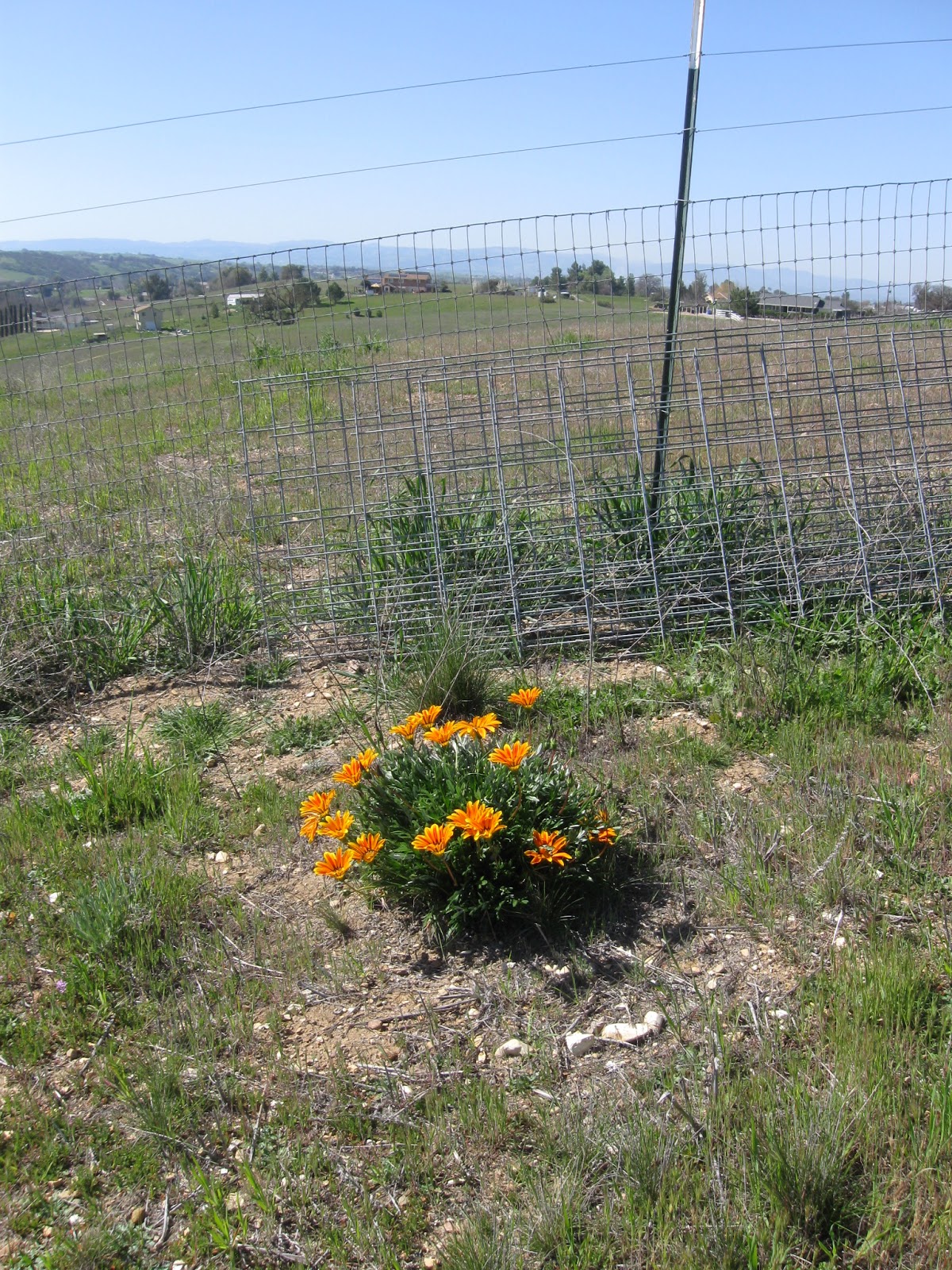
This gaillardia, for example is so stunning I am dying to move it to a place where it can be shown off, rather than where it currently sits in our pasture. But since it looks like this with absolutely no supplemental water and has been here for as long as we have, I am afraid if I try and move it I'll sever the tap root that's probably keeping it alive. I'm sure if we ever get livestock I will fence it in or borrow a tractor to dip deep and bring it up, but for now I get to enjoy it every once in awhile when I am down pruning berries or weeding.


These coyote bushes showed up in the exact spot you see them in, when we killed the front lawn (intentionally) the first summer we moved in, as we prepared to plant some drought tolerant plants. I decided to leave them in and they are now two massive, oval-shaped shrubs, which do require shaping but little else (including water). And both the birds and bees absolutely love them, so I'm happy to allow them to stay. True, I had to do my landscape design around them, but to have two such mature-looking plants in the yard after only three years was worth some revision.


These baby coyote brush plants (above) will be transplanted up to the top fence line of our property, where we plan on having a privacy hedge. One thing I can say about coyote brush is that while many of our neighbors remove it as soon as they see it, we use it.  Free native plants, right?


And this little tomato somehow withstood all our winter freezes and is planning on blossoming soon. This is perhaps our most important volunteer, because through its survival, I now know we have a significant warm microclimate in this spot in the yard where it may be possible to grow citrus. So thank you persistent tomato plant. 


Sunday, April 19, 2015

Fire Safe


Big Ag borrowed the neighbors' tractor this morning and not only cut the grass in the pasture, but also cut a huge firebreak around the rest of the property.  It's not a guarantee this place won't burn in a wildfire, but it definitely improves the odds.

This will be a long, dry summer by all accounts, so it's best to get started and be prepared early. This year was actually wetter than the last two have been, and so we saw a lot more growth of native grasses -- four foot tall native grasses -- than we have in the past.  And so we have finally realized we have two choices:  Buy a tractor or put up some fence and get some sheep.  Or maybe both. Because while I love sheep, Big Ag looks awfully happy on that borrowed tractor!


Thursday, November 13, 2014

The Season of Green


Green is slowly returning

November typically marks the return of green to our area, after what always seems to be an endlessly long and brown summer.  We've had an inch and a half of rain over the last couple of weeks -- not enough to end our drought, but definitely enough to replenish the dry ground to a point where the green grasses and other native brush are just starting to emerge again.

Not just grass, but roses too!

When people come into the winery at the end of the summer and I tell them that in November all those brown hills will emerge in a kind of green haze which will grow and become more colorful until we positively look like Ireland by springtime, they always look at me like I'm slightly daft. After all, the vineyard grapes are turning various shades of brown, orange and yellow by then, which is what most folks typically equate with fall. But for us, November not only marks the end of the grape-growing season, but also green season for everything else -- everything native -- and this will last until about June.

And even the backyard vegetable gardens start to spring forth with new life again, as winter gardening is not only possible, but quite popular here. Truly, fall, winter and spring in this area are the seasons of life. Summer is for surviving. 

I know some folks love fall for the beautiful turning trees and the coming of snow, but for me, I'm always excited to see the return of green after many long, brown months.

Pretty red pomegranates, ripe for the picking.  


Onions, scallions and lettuces are coming up, too.


Saturday, April 5, 2014

Holding the hill

Native plants, holding our hill in place.

We've had about 5 inches of rain since the new year, and it definitely shows on most of the hillsides.  All over, there are native grasses, mustard and lupines, along with about 10 other species I can't yet identify.  
Lupines and other flowers amid the raspberry vines.

When the rain comes there are always certain places in California where mudslides are a possibility, but we have chosen to let our hillside remain in its native state, with no plowing down or discing going on. I believe it not only helps the native insects, reptiles and bees in the area, but also the topsoil.  Which can only be good, for us as well as all the other creatures we share the land with.  

Natural beauty with a purpose.

We will whack some of this down once it's gone to seed and turned brown, but for now we're enjoying the green grasses and flowers dotting the hillsides.

Monday, February 10, 2014

Landscaping

Big Ag and I decided to spend this weekend working on the property, weeding and removing some zombie butterfly bushes.  Why "zombie" you say?  Well, because they weren't quite alive, but also not completely dead.  

They were also huge.  Which meant we needed to use his Jeep and his winch to pull the plants out.  

This was a win/win, because Big Ag loves to play around in his Jeep, and I love the times when that useless, several-hundred-pounds-of-decaying-yellow-metal hulk can do something useful, other than adorn our driveway with its persistent oil leak and rusting parts. 

I am talking about the Jeep right now, just to clarify that.  Big Ag does not leak oil (yet).

Anyway, I now have two empty holes in the ground, which means I can do some plant shopping.  This will not be edible landscape I'm looking for, but rather something that will benefit the wildlife in the area, specifically butterflies, bees and birds.  So one hole is going to get a cottonwood tree, and the other will get some kind of native, flowering plant or flowering small tree.  

I think it's important that, along with feeding ourselves, we also feed the winged creatures that rely on the nectar and protective covering that some types of landscape can provide.  It's important to share the land. So this is definitely a project that will be pleasurable to do, and I can't wait to see something green and growing in the space where the zombies once stood.


Sunday, December 22, 2013

Coyote Brush


The lowly Coyote Brush is a bane to many gardeners and farmers in our area.  A scrubby plant which springs up in the morning and can quickly grow into an 8-foot tall, unattractive monster before dinnertime (OK, so I exaggerate), most people pull these plants out as soon as they crop up.  But I like them.  To me, they represent the quintessential drought-tolerant plant we should actually be using in our dry, mediterranean landscaping, and after a year's worth of watching them, I can tell you why.

First of all, you can give these plants NO water whatsoever if you choose, but if you provide just a small amount of water once a week or so, they will stay healthy and green throughout the year, without getting too woody or leggy.  When frost strikes and takes down your colorful (but temperamental) geraniums and bouganvilla, your coyote brush will still be green.  When everything in your yard looks a little burned and brown after a long, hot summer, there again is your faithful Coyote Brush, looking fresh as a rose after rain.

Coyote Brush can be shaped into whatever form pleases you.  The ones around my property are shaped into Christmas tree-like triangles, which keeps them neat and also allows me to control their height. But you could shape yours into a ring shape, a dog shape, or a Miley Cyrus twerking shape -- your choice.

But to me, the most important thing is the benefit these bushes provide to the local ecosystem.  They bloom late in the fall, when many plants have already gone dormant, and become a literal beehive of activity, as bees flock to the bushes each day.  In winter, they provide a thick covered space for birds of several species to find camouflage and safety.  And of course on the hottest summer days, they provide shade for all manner of birds and small animals.  They also appear to be gopher and deer proof -- always an advantage up here in the hills.

They do not take well to transplanting, unless they are quite small, so my recommendation is to watch your property and, when you see a seedling emerge, transplant it ASAP to a place where you want it to stay and grow.  I am planning on creating a hedge along our front yard, so that is where my plants will be going as I find them.

But most importantly, don't remove them entirely from your land.  They provide such a vital and necessary habitat to our native bees and birds that keeping a few around, just for that purpose alone is a good idea. And I think is also a good step towards being a good steward of the land you've been given, whether it's a suburban back yard or acreage.  The coyote brush deserves a place among whatever you are growing.


Tuesday, February 5, 2013

To Weed Block Or Not To Weed Block...Hmmm

A Weedy Dilemma


So this morning I installed weed block in our front yard, before laying down some bark and finishing the lawn removal project we started last fall.  And just to be sure I was doing it right, I checked a few internet sites, only to find out there is a massive backlash against the use of landscape weed block, from gardeners everywhere...which leads to the dilemma:  Do I weed block or not?  Basically the arguments against it go as follows:

Weed block is ultimately unnecessary, because the mulch or bark you spread over your yard will 1) deter weeds all by themselves, and 2) break down and enrich the soil as it decomposes. But if you put weed block in place before laying your mulch or bark down, when the bark breaks down it will not become part of the soil -- it will just sit on top of it, uselessly. There's also the little issue of landscape fabric being non-recyclable, with some being made of plastic compounds.

Those are convincing arguments.

Nonetheless, I still weed blocked the front yard anyway, using non-plastic weed block.  Why?  First of all, because enriching the soil around the yard is not something I am interested in.  If I had spreading groundcovers, or planned on a more busy garden, adding plants as the years went on, I would leave the weed block out of the mix and just bark over the yard, since good soil would be something I needed in the future.  

The mostly-native plants that are growing out there will be receiving natural compost and of course water, but most of the yard is being left fallow, intentionally, because we want to use very little irrigation on anything not producing anything edible.  All these plants we put in do well on very little water and poor soil, so they are well-adapted to what's there now.  

The other thing is that while weeds ARE deterred by a thick layer of mulch, many of the native weeds we have here put down deep tap roots and, once in, are almost impossible to yank out.  A layer of weed block assures that, if those weeds do start to grow, they will not be able to get under the fabric layer and will therefore be easier to remove.

I also wonder how many people don't use the weed block and then end up using copious amounts of Round-Up instead of old-fashioned weeding.  I am a realist, and know I will be concentrating more on our food crops than our front yard, so I want to make sure I have to do as little weeding as possible, because I absolutely hate using Round-Up and avoid it at all times....even though it has low mammalian toxicity, it is still extremely hazardous to creatures like toads and frogs, both of which reside on our property in abundance. So thanks, but no thanks.  

So often things seem to come down to using what we consider to be the lesser of two evils.  I'm not in love with weed-block, but if it prevents Star Thistle from settling in as permanent yard-scape plants, as well as allows me to pull weeds easily instead of resorting to chemical warfare, then I'm willing to bite the bullet and use it.  

That being said, I am getting extremely excited as we approach the end of this lawn-killing endeavor.  The front yard has looked so bad for so long, to see bark and green, growing shrubs will be much easier on the eyes than how it's looked recently.  I'm sure our neighbors will agree.

Monday, January 14, 2013

Food Not Lawns

One of the first things we did when we moved here was to take out the water-sucking front lawn.  Out here in the country, running any water means using a precious (and dwindling) resource, and also running your well, which costs you money.  So you'd better love what you're watering, because you're paying for it. 

Since the huge front lawn not only wasn't giving us anything back in terms of food, but also requiring water PLUS going out when it's 90 degrees to mow and edge, we decided the big front lawn had to go. So we stopped watering it.
We are planting shrubs. These are not giant gopher holes.  

So here we are now, in January, with the lawn good and dead, and we have begun to fill in the former lawn space with some lovely, drought-tolerant plants, shrubs and trees.  We have lots of rosemary and lavender, and also some Torch Flowers, Gold Coin, Santolina (medicinal in addition to being a lovely landscape plant), ceanothus, a China Berry tree, and some other native stuff.  

We bought all these at the local nursery.

So we're at that same nursery this last weekend, buying vines and talking to the lady there about our neighborhood, which she's quite familiar with.  We're discussing the house that's kitty-corner from us, which was foreclosed on and where everything, trees included, died when the bank stopped watering.  Call it another casualty of the Great Recession.

But then the lady (who obviously doesn't know which house is ours) quips, "And what about the house across the street from the foreclosure?  Those people have totally killed their lawn!  I don't believe it!  Why would anyone do THAT?"

Ahem. Yes, I'm sure you guessed it.  We are "those people."

I relayed this to her and she pretty much died of embarrassment right on the spot.  But it does lead one to wonder:  Are people still so behind the curve they believe watering a half-acre of turf is somehow a wise thing to do, in an area where the water table is dropping?   

While it is hard to be considered "those people," conservationists have to be willing to stick to their guns and realize they may be out in the lead in terms of forward thinking, and that some people still haven't understood the reasons behind conservation of water and other resources, and the urgency of getting on with it. 

Like the old saying goes:  When you're two steps ahead of the crowd, they'll call you a crackpot.  When you're one step ahead of the crowd, they'll call you a genius.

Signed, 

The Neighborhood Crackpots.