Showing posts with label tomatoes. Show all posts

Thursday, October 31, 2019

Long days turning into nights

I never realized it, but Halloween's Samhain origins are all about the change of seasons, namely autumn turning into winter. The change is very real up here in the Pacific Northwest, autumn leaves have peaked already and we've had a cold snap this week with nights down into the 20s. 


Autumn color and some new paint!

With the longer nights coming, the last month was a last-minute rush to finish projects before working outside became an unattractive prospect, and we got most things on our project list done. The rest will wait until spring.


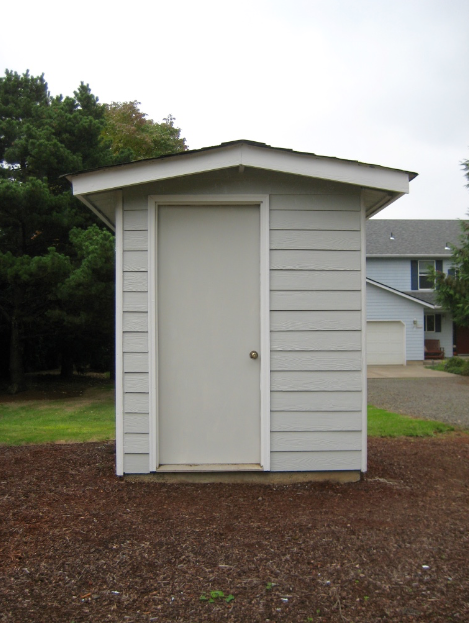
Hen Mail. This will hold garden tools and chicken treats in the back pasture.
They certainly aren't camera shy.

With the cold temperatures Ella and Esme are coming in at night, since they are only eight weeks old and it's well below freezing for about 10 hours a night -- quite unusual for our part of Oregon. I'm probably being overprotective, but if being a helicopter chicken mama is a crime, convict me. There's nothing more emotionally expensive than regret, especially if your livestock dies because you assumed everything would be OK...and it wasn't. 


But while I've managed to save the chicks from having issues due to the cold weather, the paint on our brand new shutters has not been so lucky. (although the newly-painted house itself looks amazing!) We discovered the latex paint the painter used did not adhere to the vinyl shutters, so when the temperatures dropped and then rose rapidly the paint blistered, bubbled and peeled.


Frostbite? Sunburn? Either way, ugly.

That lovely green paint peeled off using only my fingers, in one fell swoop. Yikes.

That's disappointing, because now we're stuck with $300 worth of shutters we can't paint (although I'm thinking after I peel the paint off I can donate them to Habitat for Humanity and take a nice tax write-off, since they are good as new, just the wrong color.) And on the bright side, we CAN replace them with green vinyl shutters that are close to the trim paint. For those keeping score, cha-ching, another $300. Since we picked the shutters ourselves I don't blame the painter. I blame us. 


Even at our age, this kind of thing happens sometimes; we face home improvement challenges, and we either complete them handily or mess up and learn from them. At the rate we are going, by the time we are 80 years old we will literally know everything there is to possibly know about house maintenance -- at which point no doubt we will promptly move into a retirement facility.

And on the homestead front, I finally hauled all 12 quarts of tomatoes out of the damn freezer and just canned them instead of keeping them frozen. They were taking up way too much space in the chest freezer, while empty shelves stood unused in the pantry. I got a fair amount of "tomato water" in my cans due to freezing the tomatoes first, but since most of the recipes I use them for call for a cup of water to be added anyway, I've got that. And I can see what I have in my freezer once again -- always a good thing.


Tomatoes...and water. 

This weekend when the clocks go back it will be a time of drawing in next to the fire and enjoying inside activities. Everything we didn't get done outside will now have to wait until spring. And since I don't drive much in the dark anymore, any evening event or party not close to home will be something we take a pass on. We're heading into the long nights now. Time to slow down and settle in. 

Thursday, October 3, 2019

Home Chores: Mom vs. Dad

Great color for the pump house, not so much my hair.

The house painter is here as I write, patching, caulking and priming the exterior of our house to get it ready for painting, which will hopefully happen next week. Tuesday I went to the stylist to get my hair cut and as she was washing my hair, she asked, "so...doing some painting?" Apparently there were a couple of different shades of paint I'd somehow gotten into my hair while I was painting walls and a couple of outbuildings around here, before the painter showed up for the Big Job. 

I'm of the opinion that when you start to wear your work it's probably time for a break. 

I used to have some neighbors who had a very clear division of labor in their home: mom took care of everything inside -- cooking, cleaning, laundry, etc -- and dad took care of everything outside, like yardwork. Since mom had no interest in gardening, their roles were enjoyed by both and their house was run well. What was funny was that I was a single mom at the time I lived next door to them, and so I started to realize that around my place, I was both mom and dad. I still am to some extent.

That's because Big Ag works off property in a high-powered job in the agriculture sector, which leaves me pretty much in charge of the homestead. The things I can't do, he gets memos on, in the form of "to do" lists. Anything that requires significant upper body strength I leave to him. So he stretches fence, digs holes, and builds outbuildings in his spare time, which believe it or not, he loves doing, since most of his day job uses brain, not muscle power.  

I do all the typical housewifery-type stuff, but also work in the garden, manage the general landscaping, do the painting (wherever possible) and decor, and manage our finances.

I'll never hire someone to pick our pumpkins. Too much fun.


It works, but honestly after a day of being on a ladder painting or moving 10 yards of pea gravel, the last thing in the world I want to do is come inside, clean house and cook. And so on the days when I'm the Estate Manager and Chief Handyman (dad), those mom things suffer. I've joked before that all I really need to do is hire a professional housewife from 9 - 5 to manage all that inside stuff when I've got a lot of manual labor to do outside. But with the painters here, I've actually had time to clean the house really well, can some tomatoes, AND have some good food prepared by the end of the day.  

When I worked at the winery, I had a housekeeper, so many of my "mom" tasks were covered by her. This week, I'm paying someone to do some "dad" stuff. You can probably gauge how busy you are at times by how many auxiliary people you need to hire to help you. But unless your homestead is your job, some aspect of what you do is probably hired out, whether it's the construction people, electricians, or just hitting a restaurant for take out dinner once or twice a week because you're too tired to cook.

None of us can do it all, and even if you could, you shouldn't even try. It's exhausting, plus there's every chance you'll end up resentful over some aspect of your never-ending tasks.

But in a year full of dad-type house stuff, I gotta say being inside with a latte preparing dinner has been a little slice of mom heaven. 


Monday, September 23, 2019

Summer's End


One of the things I love most about life in the Pacific Northwest is the seasonal changes. No season ever wears out its welcome by sticking around too long. I'm especially happy about that when it comes to summer, whose backside I've never been sorry to see -- even up here. This year we had two days of 100 degree-plus temperatures, a handful of 90 degree temps, but mostly our summer stayed in the 70s and 80s. Perfect.

The lawn at our newly-bought home did turn brown in July and August since the property has no irrigation. Early in August, when we were sick of looking at it, we briefly entertained the idea of putting in some sprinklers, but with .75 inches of rain later that month and the same so far in September, it's all greened up nicely -- and quickly.


There is a three week difference in when these photos were shot. What a difference an inch of rain makes!

The one downside to those mild temps and rain is that my tomato harvest has really come in slowly. This necessitated a new protocol for canning, which is actually not canning this year. Instead of running the water bath canner for just one or two quarts of tomatoes, instead I've started blanching bowls of tomatoes as they come in and then vacuum freezing them. Next year I'm planning on planting a variety of tomato called "4th of July," which as you've probably guessed, is an early ripening variety. Live and learn.

We do have plenty of pumpkins for pies and bread this winter; squash, eggplants and cukes are just about done, so the only thing left in the ground are some late season lettuce and onions. All in all, I'd say our 2019 garden was a success, and we'll expand next year with more raised beds as well as some fun new galvanized troughs for planting containers.


When we weren't in the garden or fixing things around the house we were installing and painting a new chicken mansion for the girls. It's 8 x 10 feet inside, so in the rainy season they will still have plenty of room to scratch and peck. Unreasonable, you say? Nope. Not when it rains 48 inches a year.

La Poulet Mansion


Sadly, we lost two of our favorite hens -- Callie and Chloe -- in that weird 2-day heatwave, probably due to their age. So yesterday I headed to the feed store to get two fall chicks. Ella and Esme will take their place in the flock for spring laying, provided they are both hens, which the feed store only provides a 90 percent guarantee on (so fingers crossed). But for now it's been fun having them peeping and cheeping in the dining room, where they'll live until they're ready to go outside (hopefully before Thanksgiving).


The next and last big push will be to paint our pump house, front door, garden shed and shop before the regular rains set in. We're hoping the painter can paint the house by then, too. But since it's still a little chilly outside right now, I think I'll have a cup of tea, kick my feet up and watch my new chicks explore their world!

The forecast: Foggy, with a splash of autumn.


Monday, August 7, 2017

Mañana


I will can them...mañana.

Don't know if I've mentioned it, but when my family had our DNA analyzed, it revealed my mother's side of the family comes from Northern Europe and my father's side from the Mediterranean/Middle East. 

While it's kind of a cool combination, I also think it means I have a constant war going on inside me, between my Scots work ethic and my Mediterranean "mañana mentality." The latter phrase, while it has a Spanish-sounding name, is actually an attitude which occurs not just in sunny Spain, but throughout Southern Europe and the Middle East. (You can tell this because if you visit someplace in the region, like the Acropolis in Greece and they have scaffolds up and are working on restoring it, when your friends visit the same spot 30 years later, the same scaffolding is still up and the place looks exactly the same. True story. I'm sure they're getting to it soon. Really.)  

Who knows, maybe it took the Israelites 40 years to get to the Promised Land because they figured they could always "just go tomorrow." Makes sense to me.

To that slack-y end, I've decided my summers spent slaving over a hot water bath canner are over. This year I'm experimenting with freezing my tomatoes first, then canning them once autumn and cooler temperatures set in and it doesn't feel like my entire being is on fire if I stand in front of the canner.

I'm not sure why I didn't try this years ago. Probably because my Scots ancestors were nagging inside my head to be productive and task-oriented and hard-working. What do they know? The other half of my DNA decided this was, in fact, torture, and that while canning is all well and good, it should not be done if you have any hope of trying to keep the house cool. Which the inner Scots, not surprisingly,  agreed with, since it involved saving money and being thrifty with electricity and all that.

And so into the freezer goes the tomato bounty of summer. And onto the sofa goes me and my 46 chromosomes, with a cold beer and an authorized permission slip of sorts from both sides of my ancestry to put tomato canning off for now. 

It's nice when we can all agree on something.


Thursday, August 4, 2016

Tomato Death

Ex-tomatoes. RIP.

So my tomato crop this year at the homestead has been a total and complete failure. One of the things I learned in my Master Gardener coursework is that crops that are suffering and dying generally are not infected with disease; most of the time it's our own husbandry habits -- watering trends, over/under fertilizing, or other human factors which have inadvertently killed the ones we love...well, the green ones, anyway.

But for the second summer in a row my tomatoes have fruited poorly (this year not at all) and had a wilting issue, which I now realize is either being caused by fusarium or verticillium wilt. Both are soil-borne diseases that can last for years in soil, and so now I'm faced with fixing the issue, along with buying tomatoes at the farmer's market for the foreseeable future.


It doesn't really matter which wilt it is, fusarium or virticillium -- that's like debating whether getting run over by a Subaru Outback versus a Forester would be worse. The point is you, or in this case my tomatoes, are flat on the concrete at this point, and aren't coming back.


Luckily, since my contaminated soil is in raised beds, I can opt to either replace all the soil or solarize the bed. I'm going to solarize since we're at the height of summer -- spreading some clear plastic over the beds and letting our blistering summer heat do its work, raising the temperatures in the beds to about 160 degrees and killing the fungus...hopefully. 


Next year I will also have to plant VFN-resistant (VFN = verticillium, fusarium and nematode) hybrids instead of heirlooms. Luckily "Better Boy" is one of my favorite hybrids, so I have hope of salsa in 2017. I will miss my heirloom Mortgage Lifters and Pink Ladies though, but I'm taking no chances. It's sad to let those seeds go, but they will live on at the winery in the garden, so all is not lost.


It does make me understand exactly why these hybrids were developed, however. Losing an entire crop to disease is unfortunate for me, but could be catastrophic in the ag sector or on a family farm back in the day when no tomatoes actually meant no tomatoes -- period. 


Heirlooms are beautiful and are all the rage these days, but it's important not to forget exactly why some of these hybrids -- common, easy-to-grow; disease resistant and prolific -- are an important part of the crop world. They get a bad rap but the truth is are sometimes the answer to a prayer.


And I'm already praying for my 2017 crop, believe me. And luckily, my self-esteem got a boost this morning when I was able to can 20 pounds of pickles in the form of relish. So the preserving season has not been a total bust vegetable-wise.


But then there was relish.

And lots of flowers.


Wednesday, June 1, 2016

Welcome June


June is bringing in the hottest weather of the year so far; no June Gloom fog and clouds here this year, sadly -- although the month is young, right? But things around the garden are loving this spate of heat, which will likely go away within a week or so. (hear oh Lord our prayer)

Milk Carton Tomato Kids.
The tomatoes are snug in their milk cartons to protect them from the wind and are quite happy.


As are the zucchini squash I said I wasn't going to plant again this year....Why do I plant zucchini. Why? Why? Because I need something to leave on my coworkers' desks when they are not looking. That's why.


I even planted a bed for cutting flowers this year with a couple of Bell Peppers thrown in for good measure. We'll see how that goes.


20 more just like this one!

And I've had the best berry harvest since moving here. More than enough for pies and sauces and galettes galore. While I sold some of these beauties in the past, this year everything is being preserved, because last year I got only a handful of berries. The moral of that story is that you just never know what the weather is going to to for, or to, your crop. The Great Berry Deficit of 2015 was a crisis of epic proportions, so this year I'm not taking any chances. Sorry, friends and neighbors. It's every man for him/herself where berries are concerned. Get your own.

My garden at work is producing zucchini already, along with tomatoes and lots of herbs. And my corn and pumpkins are popping up, too! (Pics later this week)


But still, when it's this hot, the order of the day is to finish work early, say by 10 a.m., and shelter in place somewhere cool, like inside with a good book. I'm currently reading "The Geography of Bliss" by Eric Weiner...a look at the places on earth where people are the most happy. Fascinating.
Berry good.
I'll tell you what...as long as I have plenty of berries and a cool place to retreat to in the heat of the afternoon, I'm convinced I'm actually in one of the happier places on earth, even when it's triple digits outside.

Hope your spring is springing up lots of greenery and food!

Friday, April 22, 2016

Wild roses (couldn't drag me away)

Since the gazebo is about 12 foot tall, I'm guessing the rose bush is...9 feet?

Last spring when we had our first contractor come in to give us a bid on remodeling the backyard, he could not get over our taller-than-us iceberg roses. He snapped pictures to send to his wife and kept telling us, "I had no idea roses could get this big -- I love them!"

Our iceberg roses stand about nine feet tall, and when they bloom the white-on-green color is amazing. It's especially beautiful by moonlight.  In our last home, we had a Mojave rose we allowed to do the same thing, and every spring it was a profusion of sunrise colors in our back yard.
Big bushes.

I believe in letting things take their natural shape and size whenever possible. These roses had been kept to about a two-foot height by the gardening company that kept the yard tidy for the lady who lived here before. And yet, apparently they always wanted to be larger. So when I realized how many of the neighbors' lights were blocked out by having larger rose bushes (giving us a darker sky and better view of the stars), I decided to let them become what they wanted to be. I prune them in January every year, taking a couple of feet off, and I dead-head after each bloom, but they recover quickly.

I also have a Bay Laurel "tree" that seems quite committed to becoming a bush, so I'm allowing it to do that. I had a tomato plant last year that wanted to sprout in November, so I let that happen and it's overwintered and is now ready to produce fruit.


Over-wintered tomato in January. It's twice this size now.
Some plants you can't allow to run wild. I have coyote brush outside and if I let it go it would crowd space that's designated for other plants, so I have to keep it within bounds. Other plants I will allow to blossom before cutting them back to where they should be. 

But where you can, why not let gardening be a little bit fun and see what natural shape and size some plants will grow into? Not knocking the well manicured hedge or the symmetrical 2-foot rose bushes that are pruned down to their canes every year, but it almost seems that plants can and should reflect their owners, so I guess it's no surprise that my garden will be a little unorthodox and rebellious. 

I like my roses wild, thank you. Like my life.

Friday, November 6, 2015

Procrastination and "Honey, What Were You Thinking?"

So I have 30 pounds of tomatoes in the freezer waiting to be canned. Back in September, when I told myself I needed to have them all processed by a couple of weeks before Thanksgiving, that seemed like an easy deadline to keep.

And now I'm up against it. So next week it is. Production happens around here sometimes only after procrastination has run its course. 

Tomatoes. Next week. Firm. You can't bump tasks into the future once the future arrives, which is always sooner than expected.

In other news, Big Ag promised a good friend that his daughter's boyfriend could park his 26-foot long RV on our land this weekend. The catch? We don't have land to park it on, nor an RV space...we live on a hill. Does the friend know this? I don't think so. So a 26-foot RV will be parked front and center in our driveway all weekend long, housing someone we don't even know -- a boyfriend of a friend's daughter. We don't even know his name.

These are the things which test a marriage, I'm tellin' ya. And that's all I'm saying about that.

Tuesday, September 8, 2015

Tomatoes in an arid land

This last week I have been up to my elbows in tomatoes, putting up spaghetti sauce, paste, and salsa for winter. This is a mostly enjoyable activity, but this year, due to triple digit temperatures and our ongoing drought, it's been painful. Painful to stand over a hot boiling stock pot blanching tomatoes as the steam rises, and painful to see the water running down the drain as I clean the blanched tomatoes, separating the meat from the seeds and skins before running another stock pot full of water to can them once they are mixed with onions and spices and are sauce. Water, water everywhere. And not a drop to drink -- if you are using it to can. That won't do.

Promotional pic for the Victorio Food Mill

And so I purchased this: A hand-crank food strainer which can separate the skins and seeds without having to blanch the tomatoes first or even rinse them in water (except to lightly clean them before starting). This will not only save time and help keep the house cool but will also save gallons of water.

I used it this morning and was amazed how something probably invented in the late 19th century could make life in the early 21st century so much easier. All morning long, I processed tomatoes...probably 40 pounds total. There was no heat on, no electricity being used...just the quiet churning of the arm turning tomatoes into paste. Both the house and the stovetop stayed cool as the heat blazed outside. I listened to Dave Brubeck on Pandora and worked through the morning, freezing my paste once I'd finished until I process enough that it makes sense to turn on the canner. I might do it next week when it cools off...or I might do it in November when I'll be more grateful for a warm kitchen. 

Either way, today I'm enjoying the feeling when you've purchased something and realized it was totally worth the investment...in comfort, in conservation of energy, and in efficiency. Winner!

Thursday, December 11, 2014

Cleaning up

Tomato beds are cleaned out and awaiting compost.


I waited to clear the tomato plants this year until December, with the idea that having some late tomatoes would be a good idea. Unfortunately, this is another one of those DIY lessons; even though our days are warm and sunny, our nighttime temperatures dip into the low 40s and even upper 30s.  So while the tomatoes look beautiful and freshly vine-ripened, they taste like tomatoes that have been in the refrigerator for a few days....just kind of bland and mushy.  Oh well.  It was a noble experiment. It was nice to be able to put them into the salads at Thanksgiving, but honestly, they were no better than crappy store-bought tomatoes, gassed with ethylene or greenhouse grown -- okay, but definitely not like a delicious summer tomato. Everything really does have a season I guess.

For fall 2015, I'm thinking it will be better to just add some fresh onions and carrots to next year's salads and call it a day.  The tomato thing did not work.

So now they are gone (there's one last pile you can see in the right of the pic).  So it's time for making some rich, lovely soil by compost-adding, ryegrass planting (for green manure) and fallow time.  Perfect, since inclement weather is expected and being out in the elements is no fun. I can just sit inside with a glass of wine and watch my spring soil being made from the warmth and comfort of the house.

Tuesday, September 30, 2014

Seed Day


(L) Pink Lady, (R) Mortgage Lifter, both about the size of a human fist.  Beautiful producers, meaty with very little pulp.

As of today, all my summer and fall canning is done.  As promised, I put up a couple more quarts of relish and put them in the pantry, although I felt a certain "Groundhog Day" reluctance to start that water bath canner yet again.  

In the rest of the garden, the end-of-season eggplants are being made into babganoush, the pumpkins sit on the patio in readiness for whatever I need them for, and I'm bloody well sick of seeing tomatoes ripen on the vine, although not quite enough to rip out the plants just yet.  (You never know when pico de gallo or some other dish requiring fresh tomatoes will beckon, although at this point it's hard to even look at tomatoes without seeing Mason jars in my head.)

But what I did today is part of my typical fall ritual...I chose several beautiful specimens of my tomatoes and saved the seeds.  

Saving tomato seeds is easy, if you know how to do it.  Just fill a small bowl with warm water, halve the tomato and squirt the seeds into the water.  Set it in a warm place (the top of the fridge usually works best for me), cover loosely with cling wrap, and let it sit for a couple of days, stirring once a day.


Once a slight film has formed on the surface and 48 hours have passed, sieve the seeds out, put them on a paper towel and let them dry.  Once they are bone dry, they can be stored in a plastic bag with a small package of silica gel dessicant (usually found in shoeboxes or in other such products) until next spring.

It's hard to imagine, but the hundreds of pounds of tomatoes I've processed this last season all originated from just two tomatoes from last year -- one Pink Lady Brandywine, and one Mortgage Lifter.  If I processed every tomato I grew for seeds only, it's easy to imagine I could populate the entire country with these tomatoes the following year.  There is truly a gross overabundance in their attempt to reproduce.  But that is nature's way, and God's way ... making sure one tomato can feed your neighborhood next year, and one acre could probably feed the world if necessary.

So we seed savers are saving the world, one tomato at a time. And one tomato is pretty much all you'd need to do it.


Tuesday, September 23, 2014

How many years do Mason Jars last?

These need preserving!
Today is Canapalooza at The Hot Flash Homestead. The bulk tomatoes are long finished and put up for winter, but with a still-ongoing harvest, I also decided to put up another 60 pounds of fresh, new tomatoes in salsa and spaghetti sauce.  This last weekend I sent Big Ag out to buy some new mason jars, because I don't use mine for canning if they've seen three canning seasons, maximum.

The answer to the question of "why not?" is that horrible, sinking, panicked feeling you get when a full mason jar breaks in the canner and a quart of tomatoes goes floating around in the water you are trying to can in. Or when you lift a jar out and the bottom cracks open, splattering hot goods all over yourself.

The fact is, mason jars are one thing where the phrase, "they don't make them like they used to," is a valid one.  My really old mason jars, which are over 20 years old, are just fine and will probably last forever.  But the newer ones, the ones between 4 and 10 years of age, are unpredictable and have a shorter shelf life than I would have thought.
Voila!

For a long time, I blamed myself as the culprit in any jar-breaking accidents, since I am the usual first suspect when things go south in the kitchen (that assumption is usually correct, too). I figured that maybe I'd put the jars into the canner too cold, or with over-tightened lids -- you name it.  But as I became more and more careful and it still happened, I was forced to admit the jars I'd bought just three years ago had become structurally unstable, somehow.

Some of the problem may have been that I had been using my jars in between when they had canned goods in them.  I would fill them and stick them in the microwave when I wanted to heat water. I drank from them.  I stored leftovers in the refrigerator using them.  In short, once they've been used a couple of times, I tend to heat, dishwash, refrigerate, and even freeze those old glasses a lot, to a point where I think sometimes they just can't handle one more super-heating like the canner provides.
Best friend and occasional foe.

So every couple of years, I have now resorted to buying some new ones, since new jars have never broken in the canner -- one once.  I try and vary my stock so I know what year they are from (narrow mouths one year, tinted for a different year, wide mouth for yet another), in order to identify which ones should be put aside for one or two more canning seasons, and which ones need to become drinking glasses. 

How has your experience with mason jars been?  Have you ever broken one in the canner? 

Friday, September 12, 2014

Life Goes On


Hmm ... eggplant, tomatoes, cucumbers, zucchini -- and herbs too.  Such delicious possibilities!  Ratatouille?  Farmer's Market sandwiches? Veggie lasagna?

It all sounds good. Now is the time when we pick up the pieces, dry our tears and go on.  Hard to feel bereft with so much edible bounty surrounding us, and so much of creation's beauty at our fingertips.

I did not make my friend's Celebration of Life service, which was several hours away by plane, but while working yesterday I did get a visit from this beautiful creature, who flitted and danced around me (not my image, but the same kind of butterfly).  

She reminded me that we are all just caterpillars, waiting to become eternal butterflies. And in the meantime....life goes on.


Sunday, August 3, 2014

You're Not The Only One


Ah, that title sounds like the start to a beautiful love song, doesn't it?  And love is like that .. the wondrous feeling that you'll never be alone, and that you're not the only one who may be going through challenges and tough times.


But the beauty to that sentiment is never more true than on the farm.

As I've discussed in many a blog post these last few months, everything growing (or attempting to grow) on this hill has been affected by a summer of weather-weirdness.  Our tomatoes have been especially hard hit.  They have arms but the blossoms have blown off. The ones that have stayed have produced tiny tomatoes that are incredibly slow to ripen.

But what I never realized was that maybe it was just not our little hilltop outpost that's suffering.  

We had some contractors here the other day, working on an outbuilding Big Ag is constructing, and it turns out the foreman is something of a hobby farmer himself. "So how are your tomatoes doing?" he asked me as we visited the other day.  When I informed him of the weather-related maladies we were having (due mainly to the winds we face up here, I thought), he told me that he didn't know a person in the entire county who wasn't having the same problem. 

That's right, he said the entire county was having the same problem.  I could have hugged him.


The next day, I worked at the winery, where there is also a vegetable garden which grows tomatoes.  And just to check the validity of this "entire county" thing, I took a break from pouring and went outside to check on our winery tomatoes.  They too all looked like crap.

And for some reason, this made me feel a whole lot better. In part because of a kind of "we're all in this together" camaraderie -- we can all lament the loss of our tomatoes, which is a lot better than when you have a crappy crop, but your neighbor's crop is absolutely perfect and you don't understand why.

The other part is because at least you know you didn't do anything wrong. It wasn't your soil, not staying on top of insect or bacterial pressures, or too much/not enough watering.

Sometimes you're not the only one, and there's nothing you can do about it. Except take comfort from your neighbors, who are in the same boat with you.

You don't want to wish anyone harm, but in tough times sometimes it's nice to have company.

Monday, July 28, 2014

Mormons, Survivalists, and Overproducing Homesteaders

There's a funny thread that runs through both survivalists and the Mormons' food storage methodology, and that is the idea of the Two-Year Plan, or having enough goods to last you two years, without needing to visit the grocery store or raid the neighbor's pantry at gunpoint. 


I pondered this Mormon/Survivalist common idea for a long time, wondering who started it first, and why.  And then there was this summer, and now I know exactly how and why the Two-Year Plan developed.  At least I think I do.

Both groups took the Two Year idea from earlier agricultural societies.  Back in those times, you put up two years' worth of a crop whenever you could, in case the next year produced a shitty crop -- or no crop at all -- due to circumstances beyond your control, like weather.

My tomatoes, as well as the tomatoes of most of the folks around here, may be heading for such a year.  It's been extremely windy, also warm, but also quite humid.  We can go from a 70 degree day to a 106 degree day in 24 hours.  

And the tomatoes are responding by producing a lot less fruit than normal, and losing a lot of their flowers before they even have a chance to be pollinated. With this weird summer happening now, it appears that the fruiting season is going to be substantially shorter than normal, and if frost happens at approximately the same time as usual, we will still lose our ability to grow tomatoes at about the same time as we normally do. Meaning there are going to be a lot less tomatoes produced for canning. 

Last month (before the weird weather had really set in) I went through the pantry to figure out exactly how many quarts of tomatoes we'd used these last 365 days, and found that we used exactly half of what I put up last year. 

It turns out, I actually carried out a two-year plan without ever intending to, which means in addition to survivalists and Mormons, there is actually a third group that has a Two-Year Plan, and that is homesteaders who got out of control with their canning and accidentally oversupplied themselves. Can I see a show of hands?

But this is not a bad thing to do, when you think about it, so don't be too hard on yourself if your hand is up. It turns out, the Mormons, survivalists and your great-grandparents were on to something.

Especially in these times of extreme climate uncertainty, having a two year supply of things you can preserve from your land is great, because as temperatures and other conditions grow more and more unstable and unpredictable, you never know when that shitty season is going to happen.

Add to that potential disasters, such as the huge solar flare we missed a couple of months ago (by nine mere days!) and there's a certain wisdom found in the habits of some Mormoms, survivalists and accidental overproducing homesteaders, who manage to put up more than they can use in one calendar year. When Mother Nature gives you more, preserve more.  

You won't be sorry you did. But if you don't, you may very well be sorry you didn't when that inevitable shitty season hits.

Wednesday, June 18, 2014

Second (third, fourth....) Harvest


A few weeks ago, I cut away at my spinach plants, reaping a good harvest but leaving each stalk intact with a few leaves on each one.  Yesterday, I finally pulled the plants out and removed another big bowl's worth of spinach leaves. It was a marvelous second harvest of some plants most other gardeners would have removed after the first harvest, either because they didn't think they would produce again, or to make room for something else.

But many plants will come back again if you just harvest carefully, and leave enough leaves on the plant for photosynthesis to happen, with roots intact.


This cabbage plant is on its third season of production.  It was planted in winter 2012, and since then has produced no less than six heads of lettuce.  This started because I was initially too lazy to pull out the plant's roots, so I cut the cabbage head off and just left the rest of it alone in the bed.  Lo and behold, come fall 2013, there were another couple of heads to harvest from the same plant.  And now, in summer 2014, there are two more. The leaves may be bug-eaten and sorry looking, but the head of cabbage is still good.  Just in time for summer slaw.


And last summer, I again got lazy at the end of the growing season (if you're sensing a trend here, you're right) and left a few tomatoes on the vine, to ripen, fall into the dirt, and disperse their seeds.  And I have these volunteer tomatoes to show for it, every bit as big and lovely as the ones I painstakingly grew in the solarium this spring.

We talk a lot about the wisdom of recycling, but rarely do most of us think of allowing our plants to recycle themselves. 

For success like this, all it takes is being too busy to garden (and/or plain old laziness), some serious procrastination and some patience or just a willingness to look away for awhile while Mother Nature works her magic.